
Regulators ask for safety substantiation, but what they actually want to see are the human studies behind it. The two most common approaches are the cosmetic patch test and the safety-in-use study. Understanding both the difference and the sequence determines whether your product safety dossier is solid or just adequate.
This article walks through both study types step by step: when to use each, when to use each, how they compare for EU and US markets and how to build a pragmatic, defensible human safety programme for your cosmetic product.
What is a Cosmetic Patch Test? The First Line of Human Safety Testing
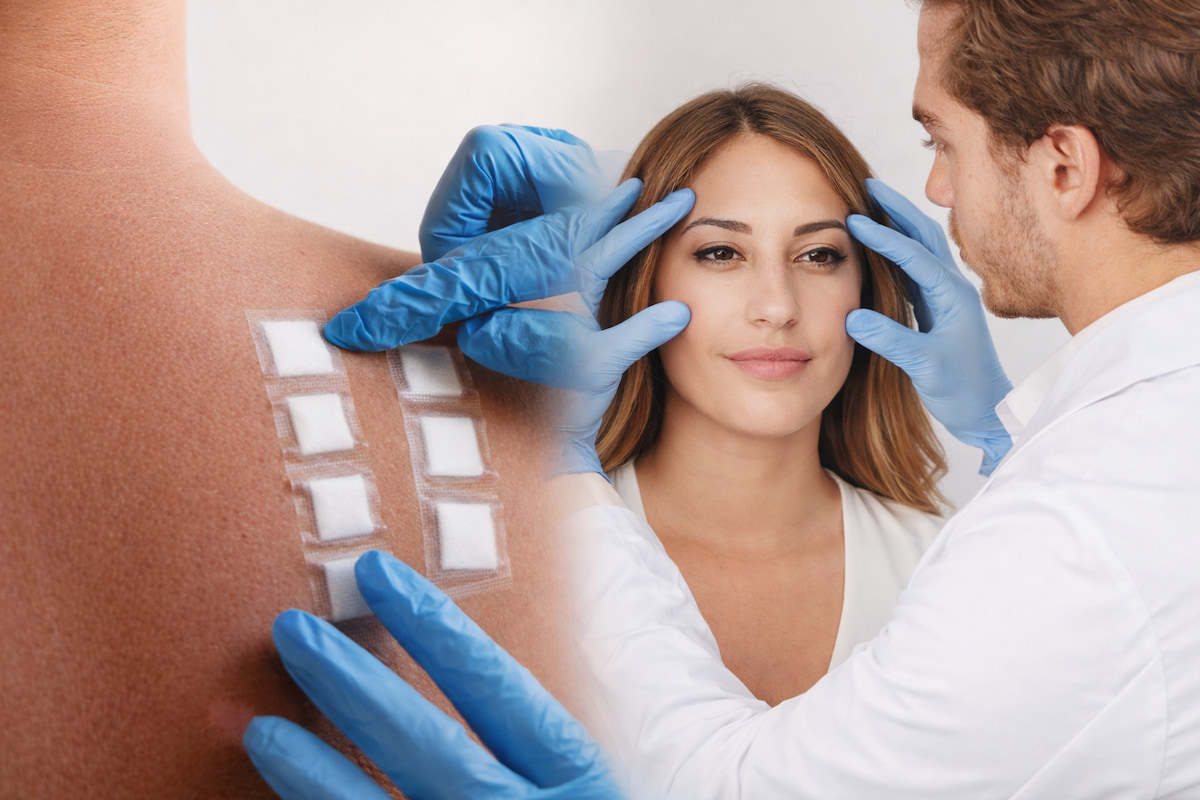
For most topical cosmetics, the patch test is the first human safety study. It screens for irritation and sometimes sensitization, under controlled, exaggerated conditions before a product reaches real consumers.
EU patch testing: what standard practice looks like
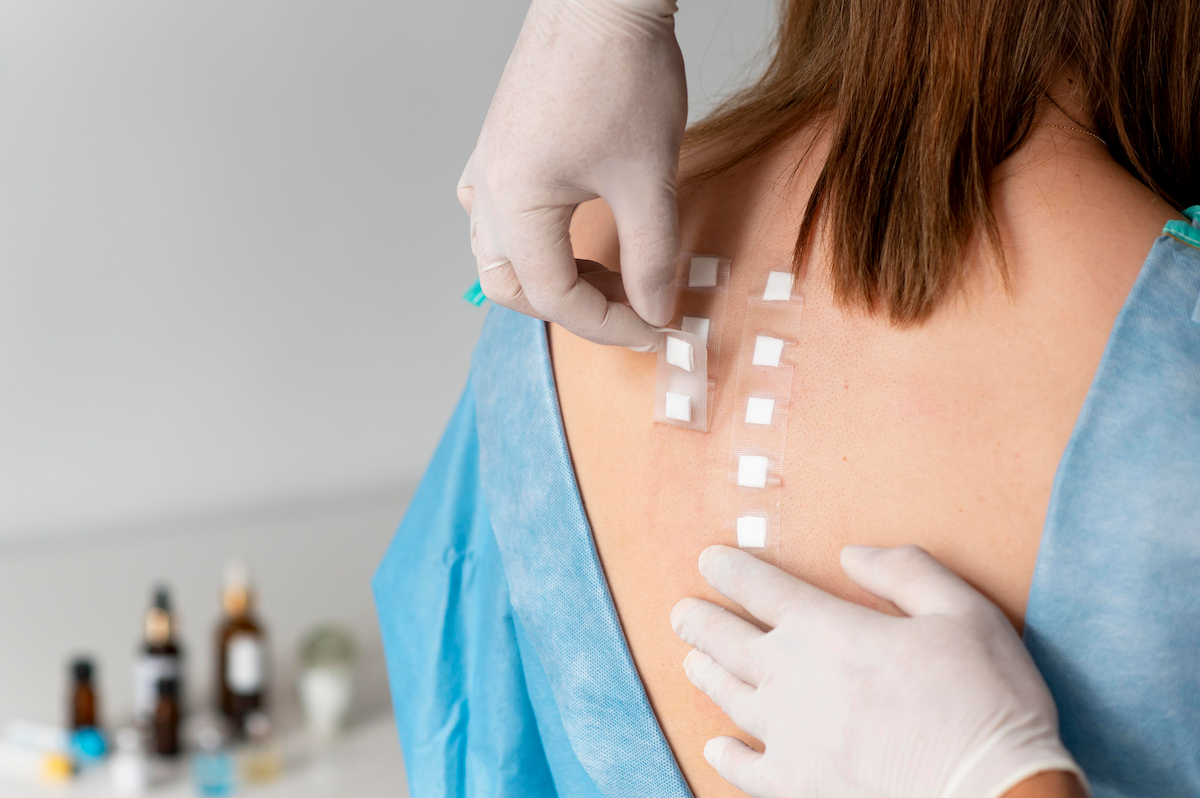
In the EU, standard practice is a simple occlusive or semi-occlusive patch test on a panel of 20-30 healthy adults with a 24-hour occlusion. This confirms that a finished cosmetic product does not cause unacceptable acute irritation on intact skin.
For low-risk, well-characterised formulas, this type of basic patch test, combined with a solid safety assessment and supporting toxicology data, is often considered sufficient as an initial human safety step.
US patch testing: HRIPT as market standard
In the US, brands and testing houses typically go further and use an HRIPT (Human Repeat Insult Patch Test), a repeated patch test on larger panels of 50+ subjects under repeated occlusion.
- Gold standard signal: HRIPT is widely treated as the “gold standard” for in-vivo irritation and sensitization screening. It is frequently required by major retailers including Amazon and Walmart.
- Hypoallergenic claim support: HRIPT assesses allergenicity potential, as any sensitization that occurs during induction will show up at the challenge site after the rest phase. Combined with ingredient safety review, HRIPT data can support a “hypoallergenic” claim.
- Regulatory status: HRIPT is not explicitly mandated by law for cosmetics. It is a strong market practice and risk-management tool, not a line-by-line regulatory requirement.
What is a Safety-in-Use Study? Going Beyond the Patch
A patch test answers a narrow question: does this product irritate or sensitize skin under exaggerated, controlled conditions? To show that a product is truly safe in real life, you need a safety-in-use (SIU) study, designed to mirror how consumers actually use the product under normal conditions of use.
Best practice for a cosmetic safety-in-use study:
- Realistic use conditions: Run the SIU study under realistic or “normal conditions of use” per instructions, or at a modestly higher frequency. The study should run for 28 days and always on the intended body site.
- Skin type representation: Include subjects with both normal and self-perceived sensitive skin to reflect real-world users. For products targeting sensitive skin, a panel of 100% self-perceived sensitive skin is appropriate.
- Objective safety data: Clinical assessments of erythema, dryness, scaling and visible irritation performed by a trained clinician at each visit.
- Subjective safety data: Subject-reported sensations (stinging, burning, tightness, discomfort) collected via structured questionnaires.
Medical Supervision: Why the Dermatologist’s Role Matters
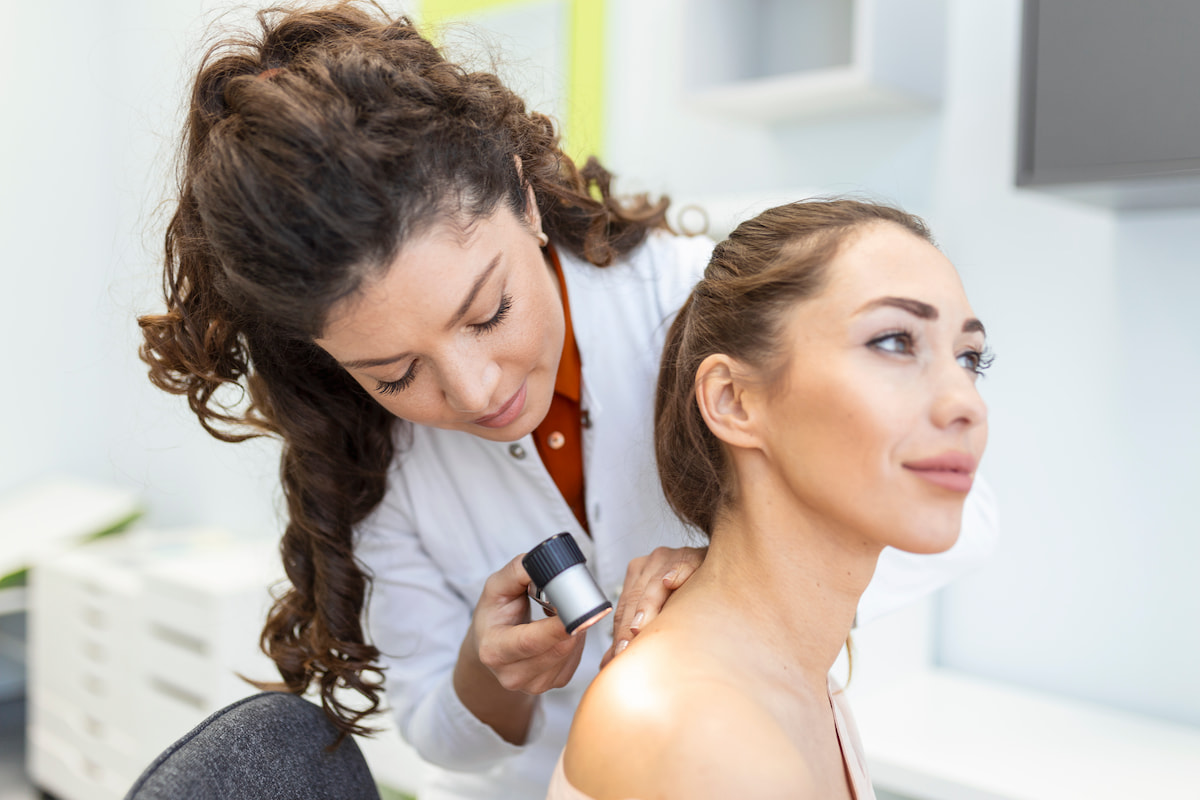
The credibility of a safety-in-use study depends not just on the protocol, but on who is supervising it. Dermatologist-supervised safety studies are now close to a must-have for skin-applied cosmetics if you want robust, challenge-proof data.
What a dermatologist does in a safety-in-use study
- Performs clinical skin tolerance assessments at baseline and final visit, scoring redness, dryness, scaling, oedema and other reactions on standardised scales.
- Reviews adverse events reported between visits and determines whether they constitute adverse reactions related to the product.
- Signs and validates the final study report, supporting both safety substantiation and the “dermatologist tested” or “dermatologist supervised” claim.
Specialist supervision for specific product categories
For products applied to specific body areas, adding the relevant specialist significantly strengthens the study design:
- Ophthalmologist — eye creams, mascaras, eyeliners, makeup removers. Assesses eyelids, conjunctiva and cornea.
- Gynecologist — intimate hygiene products, vulvar or vaginal applications. Evaluates mucosal tolerance, pH compatibility and comfort.
- Pediatrician — products for babies and children (wipes, creams, shampoos). Assesses age-appropriate use and reaction relevance in younger populations.
- Odontologist — toothpaste, mouthwash, whitening treatments, perioral products. Evaluates gingival and oral mucosa tolerance.

Building a Stepwise Human Safety Programme for Cosmetics
For most new cosmetic launches, a pragmatic and defensible human safety programme runs in three steps.
Step 1: Initial patch test
- EU: Basic single-application patch test on 20-30 healthy adults, screening for acute irritation under occlusion or semi-occlusion.
- US: Consider HRIPT on a larger panel if you want to align with common market practice and meet retailer requirements.
Step 2: Dermatologist-supervised safety-in-use study
- Run a 28-day SIU study under realistic use on the intended body site.
- Include clinical skin tolerance assessments by the dermatologist and structured self-assessments by subjects.
- Include self-perceived sensitive skin subjects where appropriate.
Step 3: Specialist-enhanced SIU where relevant
- For eye area, intimate hygiene, children’s and oral products, add the relevant MD specialist.
- Multi-specialist studies optimise design efficiency while generating significantly stronger, multi-angle safety data.

Why This Level of Safety Testing Matters for Your Brand
All of this work has a straightforward business purpose: get safe, well-tolerated products to market and protect your brand from future risk. A single severe skin reaction, especially one that circulates on social media, can cost far more than the investment in a robust safety programme. The clinical data you generate becomes the defensive wall between your brand and reputational damage.
Safety-in-use studies, particularly when supervised by a dermatologist and a relevant specialist, give you the most complete safety picture you can realistically achieve. They combine clinical observation with subject experience and site-specific expertise, generating a safety story that protects consumers, satisfies your regulatory obligations and safeguards long-term brand equity.